
Darien Location
Invisalign vs. Lingual Braces: Which Treatment Fits Your Lifestyle?


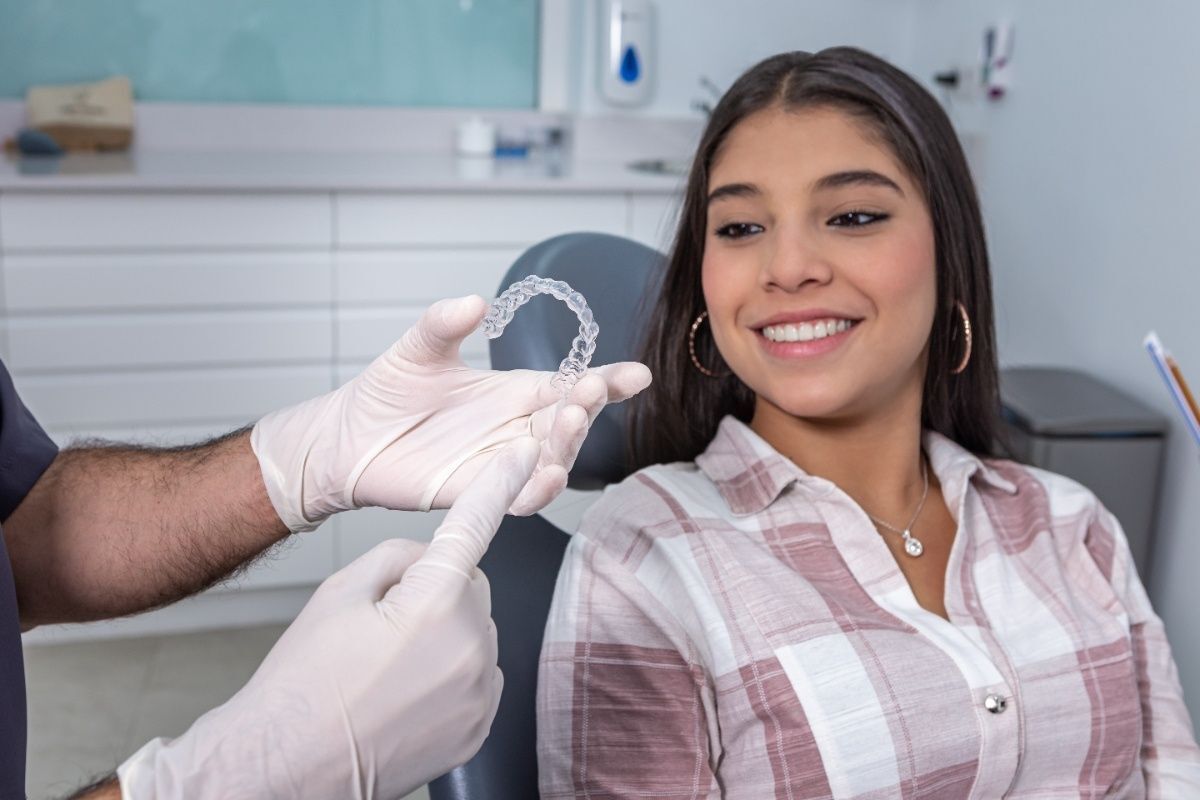
If you’re ready to straighten your teeth but don’t want traditional braces, you’ve probably come across two discreet orthodontic options: Invisalign® clear aligners and lingual braces. Both are designed to improve your smile while being far less noticeable than conventional braces—but they fit very different lifestyles.
Are you constantly meeting clients, speaking in public, or attending social events? Do you want the flexibility to remove your orthodontic appliance while eating, or would you rather have a treatment that works continuously without disrupting your daily routine? These questions matter because the best orthodontic treatment isn’t just about straightening teeth—it’s about matching your treatment to your everyday life.
Patient experience plays a major role in treatment success. A recent systematic review comparing clear aligners with fixed orthodontic appliances found that clear aligners generally led to higher patient satisfaction, improved quality of life, and greater comfort. However, the authors noted that the evidence remains limited and that treatment choice should depend on individual clinical needs.
Understanding how Invisalign and lingual braces differ in appearance, comfort, maintenance, speech, eating, and treatment effectiveness can help you make an informed decision alongside your orthodontist.
What Is Invisalign?
Invisalign is a clear aligner system that uses a series of custom-made, removable plastic trays to gradually move teeth into their desired positions.
Patients typically wear the aligners 20–22 hours per day, removing them only for eating, drinking anything other than water, brushing, and flossing.
Commonly treated conditions include:
- Mild to moderate crowding
- Gaps between teeth
- Certain overbites
- Underbites
- Crossbites
- Relapse after previous orthodontic treatment
Because the aligners are nearly transparent, they are popular among adults and teens who want a discreet orthodontic option.
What Are Lingual Braces?
Lingual braces function similarly to traditional braces but are bonded to the back (tongue side) of the teeth instead of the front.
From the front, they are virtually invisible during normal conversation.
Lingual braces can treat many orthodontic concerns, including:
- Crowded teeth
- Spacing
- Rotated teeth
- Complex bite problems
- Deep bites
- Open bites
Unlike removable aligners, lingual braces remain in place throughout treatment and work continuously.
Invisalign vs. Lingual Braces: Quick Comparison
| Feature | Invisalign | Lingual Braces |
| Visibility | Nearly invisible | Completely hidden behind teeth |
| Removable | Yes | No |
| Eating Restrictions | None (remove aligners first) | Some food restrictions |
| Oral Hygiene | Easier | More challenging |
| Compliance Required | High | Minimal |
| Suitable for Complex Cases | Many, but not all | Often suitable for more complex cases |
| Office Visits | Often fewer | Regular adjustment appointments |
Appearance: Which Is More Discreet?
Both treatments appeal to patients who want a less noticeable orthodontic option.
Invisalign
Clear aligners are made from transparent plastic and fit closely over the teeth.
Although small tooth-colored attachments may occasionally be visible, most people won’t notice you’re wearing them during everyday conversations.
Lingual Braces
Lingual braces are attached behind the teeth, making them essentially invisible from the front.
For patients who require complete concealment of orthodontic hardware—such as actors, broadcasters, attorneys, or executives—lingual braces may offer the greatest cosmetic advantage.
Lifestyle Considerations
Eating
Invisalign
One of Invisalign’s biggest advantages is dietary freedom.
Because the aligners are removable, you can enjoy foods such as:
- Apples
- Popcorn
- Steak
- Nuts
- Corn on the cob
Remove the aligners before eating and brush your teeth before reinserting them.
Lingual Braces
Like traditional braces, lingual braces require some dietary precautions.
Patients should avoid:
- Sticky candy
- Hard candy
- Ice
- Chewing on pens
- Very hard nuts
These foods may damage brackets or wires.
Oral Hygiene
Keeping teeth clean is essential throughout orthodontic treatment.
Invisalign
Since aligners are removable, brushing and flossing remain similar to your normal routine.
This makes plaque control easier for many patients.
Lingual Braces
Cleaning around brackets and wires on the tongue side of the teeth requires more time and attention.
Your orthodontist may recommend:
- Interdental brushes
- Water flossers
- Threader floss
Maintaining excellent oral hygiene helps reduce the risk of plaque buildup and enamel decalcification during treatment.
Speech Differences
Many patients ask whether orthodontic treatment affects speech.
Research suggests that both Invisalign and lingual braces may temporarily alter speech while patients adjust. However, lingual braces are associated with a greater likelihood of early speech difficulties and tongue irritation because the brackets are placed on the tongue-facing surfaces of the teeth. A systematic review and meta-analysis of clinical trials found significantly higher odds of speech difficulty with lingual appliances compared with conventional labial braces.
Clear aligners can also cause temporary lisping for some patients, but many people adapt within the first few weeks of treatment.
Comfort During Treatment
Comfort is one of the biggest factors patients consider when choosing between Invisalign and lingual braces. While both treatments move teeth with controlled pressure, the experience differs.
Invisalign Comfort
Because Invisalign aligners are made from smooth medical-grade plastic, they generally cause less irritation to the cheeks and lips than fixed braces.
Patients may experience:
- Mild pressure when changing to a new aligner
- Temporary soreness for one to three days
- Minimal irritation to soft tissues
- Easy removal for meals and oral hygiene
A systematic review published in the European Journal of Orthodontics found that patients treated with clear aligners generally reported higher comfort levels and better oral health-related quality of life than those wearing fixed orthodontic appliances. However, treatment choice should always be based on clinical needs and patient preferences.
Lingual Braces Comfort
Lingual braces are hidden behind the teeth, but because they sit next to the tongue, they may initially cause:
- Tongue irritation
- Mild soreness
- Difficulty pronouncing certain sounds
- Increased tongue awareness
Most patients adapt over time, although the adjustment period is often longer than with clear aligners.
Treatment Effectiveness
Both Invisalign and lingual braces are highly effective when treatment is carefully planned, and patients follow their orthodontist’s instructions.
Invisalign
Clear aligners work well for many orthodontic conditions, including:
- Mild to moderate crowding
- Spacing
- Certain overbites
- Some crossbites
- Relapse after previous orthodontic treatment
Success depends heavily on patient compliance. Aligners should be worn 20–22 hours per day for optimal results.
Lingual Braces
Because they are fixed to the teeth, lingual braces work continuously and do not rely on patient compliance.
They are often appropriate for:
- Moderate to severe crowding
- Complex bite correction
- Significant tooth rotation
- Deep bites
- Certain skeletal discrepancies (in conjunction with other treatments)
For some complex cases, fixed appliances may provide greater control over tooth movement.
Treatment Time
The length of orthodontic treatment varies depending on:
- The severity of the bite problem
- Patient age
- Treatment goals
- Compliance (for removable aligners)
Many orthodontic treatments are completed within 12 to 24 months, although simple cases may require less time and more complex cases may take longer.
Attending scheduled appointments and following your orthodontist’s recommendations can help keep treatment on track.
Oral Hygiene and Maintenance
Maintaining good oral hygiene is essential with any orthodontic treatment.
Invisalign
Advantages include:
- Remove aligners to brush and floss normally
- Easier plaque removal
- No dietary restrictions when aligners are removed
- Lower risk of food becoming trapped around appliances
Patients should also clean their aligners daily to prevent bacterial buildup and staining.
Lingual Braces
Patients should expect to spend additional time cleaning around brackets and wires.
Helpful tools include:
- Interdental brushes
- Water flossers
- Orthodontic floss threaders
- Fluoride toothpaste
- Fluoride mouth rinse when recommended
Consistent oral hygiene helps reduce the risk of cavities and gum inflammation during treatment.
Which Treatment Fits Your Lifestyle?
Invisalign May Be a Better Choice If You:
- Prefer a removable appliance
- Want fewer food restrictions
- Play sports regularly
- Travel frequently
- Attend business meetings or social events
- Are committed to wearing aligners as directed
Lingual Braces May Be a Better Choice If You:
- Want braces that remain completely hidden
- Prefer a treatment that works continuously
- Have a more complex orthodontic case
- Worry about forgetting to wear removable aligners
- Want maximum discretion without removing appliances
Questions to Ask During Your Orthodontic Consultation
Choosing between Invisalign and lingual braces is easier when you discuss your goals with an orthodontist. Consider asking:
- Am I a candidate for Invisalign?
- Would lingual braces provide better results for my bite?
- How long is treatment expected to take?
- What oral hygiene routine should I follow?
- How often will I need adjustment appointments?
- What are the estimated treatment costs and financing options?
A personalized consultation allows your orthodontist to recommend the treatment that best matches your oral health needs and lifestyle.
Conclusion
Both Invisalign and lingual braces offer discreet alternatives to traditional braces, but they serve different patient needs. Invisalign provides flexibility, easier oral hygiene, and fewer dietary restrictions, making it a popular choice for many teens and adults. Lingual braces remain completely hidden behind the teeth and can be an excellent option for patients who want continuous treatment without relying on daily compliance.
The right choice depends on your bite, the complexity of your orthodontic condition, your daily routine, and your treatment goals. A comprehensive orthodontic evaluation can determine which option is best suited to your smile and long-term oral health.
If you’re considering orthodontic treatment, schedule a consultation with a local Darien orthodontist to discuss your options and create a customized treatment plan that fits your lifestyle.
Frequently Asked Questions
1. Which is less noticeable, Invisalign or lingual braces?
Both are discreet. Invisalign uses clear removable aligners, while lingual braces are attached to the back of the teeth and are generally not visible from the front.
2. Is Invisalign more comfortable than lingual braces?
Many patients report that Invisalign is more comfortable because the smooth plastic aligners are less likely to irritate the tongue and soft tissues. Individual experiences vary.
3. Can lingual braces treat more complex orthodontic problems?
Yes. Lingual braces can often manage moderate to complex tooth movements that may not be appropriate for every clear aligner case. Your orthodontist will determine the most suitable treatment.
4. Will Invisalign affect my speech?
Some patients notice a slight lisp during the first few days of wearing aligners. Research indicates that most people adapt quickly as they become accustomed to speaking with the aligners in place.
5. Which treatment is better for busy professionals?
Many professionals choose Invisalign because the aligners are removable for meals and oral hygiene and are nearly invisible during meetings. Others prefer lingual braces because they remain hidden and do not require consistent use of removable trays.


