
Darien Location
Invisalign vs. Ceramic Braces: Which Is Right For Your Smile Goals?


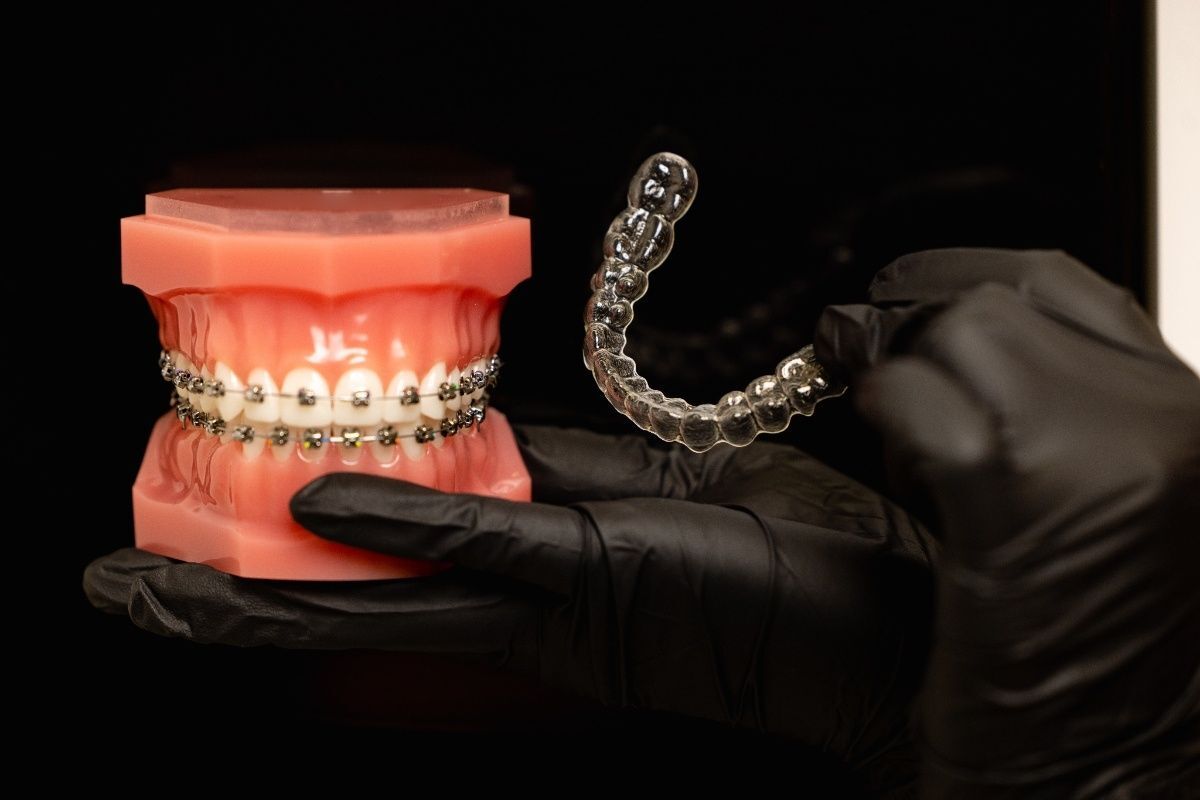
Choosing orthodontic treatment is about more than straightening your teeth—it’s about finding a solution that fits your lifestyle, appearance goals, and long-term oral health. If you’re considering discreet orthodontic options, you’ve likely narrowed your choices to Invisalign® clear aligners or ceramic braces.
Both treatments are designed to improve smile alignment while being less noticeable than traditional metal braces. However, they differ in comfort, maintenance, appearance, treatment complexity, and the level of patient commitment required.
So, which option is right for you?
Recent research comparing clear aligners with fixed orthodontic appliances found that patients treated with clear aligners generally reported better quality of life, greater comfort, and higher overall satisfaction. However, treatment selection should always be based on individual clinical needs and orthodontic complexity.
Let’s compare Invisalign and ceramic braces to help you make an informed decision.
What Is Invisalign?
Invisalign uses a series of custom-made, removable clear aligners that gradually move teeth into healthier positions.
Patients typically wear the aligners 20–22 hours per day, removing them only for:
- Eating
- Drinking beverages other than water
- Brushing
- Flossing
Invisalign may be appropriate for treating:
- Mild to moderate crowding
- Gaps between teeth
- Certain overbites
- Some underbites
- Selected crossbites
- Orthodontic relapse
Because the aligners are nearly invisible, Invisalign remains one of the most popular orthodontic options for adults and teens.
What Are Ceramic Braces?
Ceramic braces function similarly to traditional braces but use tooth-colored or clear ceramic brackets instead of metal brackets.
They remain attached to the teeth throughout treatment and gradually reposition teeth using brackets and wires.
Ceramic braces are commonly recommended for:
- Moderate to severe crowding
- Significant bite correction
- Rotated teeth
- Deep bites
- Open bites
- More complex orthodontic cases
Although more noticeable than Invisalign, ceramic braces blend naturally with the teeth and are less visible than conventional metal braces.
Invisalign vs. Ceramic Braces: Quick Comparison
| Feature | Invisalign | Ceramic Braces |
| Appearance | Nearly invisible | Tooth-colored brackets |
| Removable | Yes | No |
| Eating Restrictions | None (remove aligners first) | Yes |
| Oral Hygiene | Easier | More challenging |
| Compliance Required | High | Minimal |
| Suitable for Complex Cases | Many, but not all | Often better suited |
| Office Visits | Usually every 6–10 weeks | Typically every 4–8 weeks |
Appearance: Which Looks Better?
One of the biggest reasons patients choose Invisalign or ceramic braces is aesthetics.
Invisalign
Clear aligners fit snugly over the teeth and are difficult to notice during everyday conversations.
Advantages include:
- Nearly invisible appearance
- No brackets or wires
- Removable for photographs or special occasions (while following your orthodontist’s instructions)
Ceramic Braces
Ceramic braces use brackets that closely match the natural color of your teeth.
Benefits include:
- Less visible than metal braces
- Effective for more complex tooth movement
- Continuous treatment without relying on patient wear time
However, elastic ties used with ceramic braces may stain between appointments if frequently exposed to foods and drinks like coffee, tea, curry, or red wine.
Comfort During Treatment
Comfort varies depending on the appliance and the individual.
Invisalign
Most patients experience mild pressure when switching to a new aligner.
Research suggests that clear aligners are generally associated with:
- Lower pain levels
- Better oral comfort
- Improved quality of life
- Greater patient confidence
Compared with fixed orthodontic appliances, although the evidence is not strong enough to conclude they are clinically superior in every case.
Ceramic Braces
Ceramic braces may cause temporary soreness after adjustments.
Patients can also experience:
- Lip irritation
- Cheek irritation
- Mild discomfort following wire changes
These symptoms usually improve within several days after each adjustment.
Eating During Treatment
Invisalign
Because aligners are removable, patients can continue eating nearly all their favorite foods.
Simply:
- Remove the aligners
- Eat normally
- Brush your teeth
- Reinsert the aligners
This flexibility is one of Invisalign’s greatest lifestyle advantages.
Ceramic Braces
Patients wearing ceramic braces should avoid foods that could damage brackets, including:
- Hard candy
- Ice
- Popcorn kernels
- Sticky caramel
- Chewing gum
- Hard nuts
Cutting crunchy foods into smaller pieces can also help protect the appliance.
Oral Hygiene
Maintaining good oral hygiene is essential with either treatment.
Invisalign
Since aligners are removable:
- Brushing is easier.
- Flossing is easier.
- Plaque removal is generally more effective.
- There are fewer areas where food becomes trapped.
Some studies have also found better gingival (gum) health among Invisalign patients, likely because of the ability to maintain regular oral hygiene.
Invisalign vs. Ceramic Braces: Treatment Effectiveness
Both Invisalign and ceramic braces are highly effective orthodontic treatments when planned and supervised by an experienced orthodontist. The right choice depends on the complexity of your case, your lifestyle, and how well you can follow your treatment plan.
Invisalign
Invisalign uses a series of custom-made clear aligners to gradually move teeth. It is commonly used to treat:
- Mild to moderate crowding
- Gaps between teeth
- Mild to moderate overbites and underbites
- Some crossbites
- Orthodontic relapse after previous treatment
Treatment success depends on wearing the aligners 20–22 hours per day. Patients who do not wear their aligners consistently may experience slower progress or less predictable results.
Ceramic Braces
Ceramic braces work similarly to traditional metal braces but use tooth-colored brackets that blend with your natural teeth.
Because they are fixed to the teeth, ceramic braces:
- Apply continuous orthodontic forces
- Do not rely on patient compliance
- Can effectively treat many moderate to complex bite problems
- Offer precise control of tooth movement
For patients with severe crowding, significant bite discrepancies, or complex tooth rotations, ceramic braces may provide greater treatment flexibility. Your local Darien orthodontist will recommend the option best suited to your individual needs.
Treatment Time
Orthodontic treatment time varies depending on:
- The complexity of the bite
- Age
- Oral health
- Patient compliance
- Treatment goals
Many orthodontic treatments are completed within 12–24 months, although some cases finish sooner while others require more time.
Patients using Invisalign should wear their aligners as prescribed to help keep treatment on schedule.
Oral Health During Treatment
Keeping your teeth and gums healthy throughout orthodontic treatment is essential.
Invisalign
Because the aligners are removable, patients can:
- Brush normally
- Floss normally
- Clean around every tooth more easily
- Continue routine oral hygiene habits
Research suggests that clear aligners may have a smaller impact on oral health-related quality of life and may support easier oral hygiene compared with fixed appliances, although more high-quality studies are needed.
Ceramic Braces
Patients wearing ceramic braces should pay extra attention to cleaning around brackets and wires.
Helpful tools include:
- Interdental brushes
- Floss threaders
- Water flossers
- Fluoride toothpaste
- Fluoride mouthwash when recommended
Excellent oral hygiene helps reduce plaque accumulation, gingivitis, and enamel decalcification during treatment.
Lifestyle Considerations
Invisalign May Be Ideal If You:
- Prefer a removable appliance
- Frequently attend professional meetings
- Play musical instruments
- Participate in sports
- Want fewer dietary restrictions
- Are committed to wearing aligners consistently
Ceramic Braces May Be Better If You:
- Have a more complex orthodontic problem
- Prefer a treatment that works continuously
- Think you may forget to wear removable aligners
- Want a less noticeable fixed appliance than traditional metal braces
Pros and Cons
Invisalign
Advantages
- Nearly invisible
- Removable for meals
- Easier brushing and flossing
- No food restrictions
- Often associated with higher patient comfort and satisfaction in the short term
Disadvantages
- Must be worn 20–22 hours daily
- Easy to misplace if removed frequently
- May not be appropriate for every complex orthodontic case
Ceramic Braces
Advantages
- Tooth-colored appearance
- Continuous treatment without relying on compliance
- Effective for many complex cases
- Precise control of tooth movement
Disadvantages
- Food restrictions
- More challenging oral hygiene
- Brackets are more fragile than metal
- Elastic ties may discolor between appointments
How to Choose the Right Treatment
During your orthodontic consultation, your provider will evaluate:
- Your bite
- Tooth alignment
- Jaw relationship
- Oral health
- Lifestyle
- Personal preferences
- Smile goals
The best orthodontic treatment is the one that balances clinical effectiveness with your ability to complete treatment successfully.
Conclusion
Both Invisalign and ceramic braces offer excellent alternatives to traditional metal braces while helping patients achieve healthier, more attractive smiles. Invisalign provides flexibility, convenience, and easier oral hygiene, making it an excellent choice for many teens and adults with mild to moderate orthodontic concerns. Ceramic braces offer a discreet fixed solution that is well-suited for patients who need continuous treatment or more complex tooth movement.
Current evidence suggests that clear aligners may provide modest advantages in comfort, psychological well-being, and oral health-related quality of life for some patients. Still, both treatment options can produce successful outcomes when appropriately selected.
The best way to determine which option fits your smile goals is to schedule a comprehensive orthodontic evaluation. Your orthodontist can recommend a personalized treatment plan based on your bite, oral health, and lifestyle.
Frequently Asked Questions
1. Which is more discreet: Invisalign or ceramic braces?
Invisalign aligners are nearly transparent and are generally less noticeable than ceramic braces. Ceramic braces use tooth-colored brackets that blend with the teeth yet remain visible up close.
2. Are ceramic braces as effective as Invisalign?
Both treatments are effective. Ceramic braces may be preferable for certain moderate-to-complex orthodontic cases, while Invisalign is highly effective for many mild-to-moderate cases when worn as directed.
3. Which treatment is easier to keep clean?
Invisalign is generally easier to clean because the aligners are removable, allowing you to brush and floss normally before reinserting them.
4. Do ceramic braces stain?
The ceramic brackets themselves resist staining, but the elastic ties used to hold the archwire can discolor from foods and beverages such as coffee, tea, curry, and red wine. These ties are replaced during adjustment appointments.
5. Which treatment is better for busy professionals?
Many professionals prefer Invisalign because of its removable design and nearly invisible appearance. Others choose ceramic braces because they provide continuous treatment without requiring daily wear-time compliance.


